All tests
Blood glucose and HbA1c
Two measurements that complete each other: your blood sugar today and its average over the last three months.

- Sample
- Blood sample
- Fasting
- Yes, 8 to 12 h
- Result
- 1 working day
Why this test?
It is used to detect diabetes, which can be silent for years, or to follow its treatment. It is useful if you are very thirsty, tired, overweight or have diabetes in the family.
How is the sample taken?
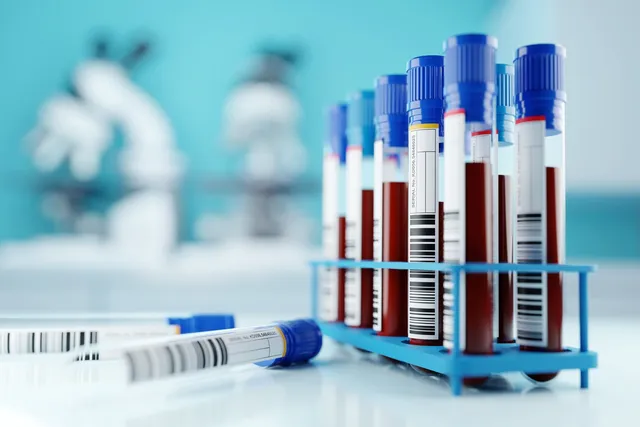
One blood sample is enough for glucose and HbA1c. For the glucose tolerance test (OGTT) you drink about 300 ml of a sugar solution. We take blood before, and again one and two hours after.
Understanding the result
| Fasting glucose | HbA1c | |
|---|---|---|
| Usual | below 100 mg/dL | below 5.7% |
| To watch | 100 to 125 mg/dL | 5.7 to 6.4% |
| Suggests diabetes | 126 mg/dL or more | 6.5% or more |
A high result must always be confirmed by a second measurement. Anaemia, pregnancy or a recent transfusion can distort HbA1c.
What we measure
- Fasting glucose
- The sugar in your blood at the time of the sample.
- HbA1c
- The share of haemoglobin with sugar attached, a picture of the last 2 to 3 months.
- OGTT
- Glucose tolerance test, on request, for example during pregnancy.