All tests
Complete blood count
The most requested blood test: it counts your blood cells and gives a first impression of your general health.

- Sample
- Blood sample
- Fasting
- No
- Result
- 1 working day
Why this test?
Your doctor asks for a blood count as part of a general check-up, or for tiredness, fever, bleeding or unexplained bruises. It is also used to follow a treatment or prepare for surgery.
How is the sample taken?
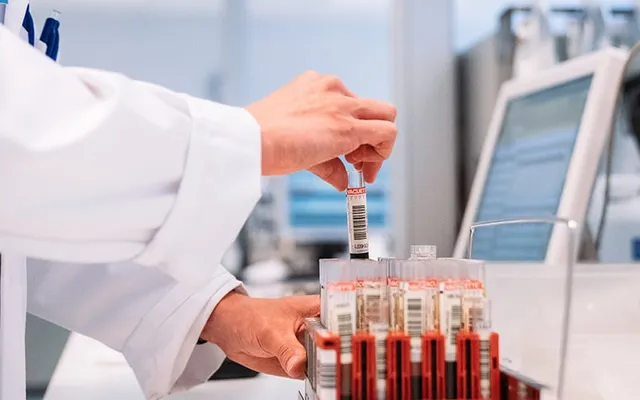
We take one small tube of blood, usually from the inside of the elbow. An analyser then counts the cells within minutes. If a result stands out, a specialist looks at a drop of blood under the microscope.
Understanding the result
- Low haemoglobin: most often a lack of iron, blood loss or long-lasting inflammation.
- High white cells: often an infection, sometimes stress or medicines such as cortisone.
- Low platelets: needs checking, because blood may clot less well.
A value slightly outside the range is common and usually harmless. What matters is the whole picture, together with your symptoms.
What we measure
- Haemoglobin
- Carries oxygen. A low value points to anaemia.
- Red cells and MCV
- The number and size of red cells help find the cause of anaemia.
- White cells
- Defend against infection. The differential counts their five main types.
- Platelets
- Allow your blood to clot.